ARNES 2012 conference (21. 3. 2012)
 20 YEARS OF THE INTERNET OF PEOPLE
The ARNES conference brings together users from the education, research and culture community, and is aimed at a broad spectrum of delegates, covering both user and systems aspects of the use of new technologies.
ARNES celebrates its 20th anniversary in 2012. In this time, we have witnessed extraordinary advances in internet infrastructure and services, with the future promising an “internet of things”. But technology makes it ever easier for people to cooperate, and it is this cooperation that gives rise to ever improving technology. We would therefore like to mark the anniversary by remembering that for 20 years we have been building a network of people, and not just wires. This conference will examine how we initially used the internet and what the future has in store, with particular emphasis on services that can help us in our activities even today.
Date and location
21 March 2012, from 9.30. The conference will be held in Hotel Kompas, Kranjska Gora.
Conference registration
Conference registration will be open from 1 February 2012 until fully booked.
Conference programme*
Delegate registration (8.00–9.30)
Plenary talks (Hall A, Hotel Kompas), 9.30–11.15 |
ARNES 2012 Conference Opening
Address by the Ministry of Education, Science, Culture and Sport
Address by Marko Bonač, Director of ARNES
Address by the Representative of “Heading Towards E-competent School” Conference
20 years of ARNES - User's Expectations for the Next Decade, Davor Šoštarič, IZUM
Moderated by: Tomi Dolenc, ARNES

 Milestones in Slovenian education and research networking
Avgust Jauk, ARNES
As a young researcher in the late 80s and early 90s, Avgust Jauk worked at the Jožef Stefan Institute on introducing network services and the internet to Slovenia. After completing a master's degree in electronic data transmission security, he began working for ARNES, where he has been head of the technical division since 1993 and is involved in international projects and technical working groups building the new generation of the GÉANT European education network.
Do you remember what the first network in Slovenia was like, and what it was called? What services were available? How did we get from connections of a few kilobits to today's optical connections with speeds of tens of gigabits, and what difficulties did we overcome? What more demanding services became possible as a result? Where are we today, where are we headed, and what are the main obstacles? This presentation covers all this and more.

 Internet Innovation to support Science & Education
Cees de Laat, University of Amsterdam
Prof. dr. ir. Cees de Laat is chair of the System and Network Engineering research group at the University of Amsterdam. Research in his group includes optical/switched networking for Internet transport of massive amounts of data in TeraScale eScience applications, Semantic web to describe networks and associated resources, distributed cross organization Authorization architectures and Systems Security & privacy of information in distributed environments. He serves as board member of Open Grid Forum and is acting co-chair of the Grid High Performance Networking Research Group (GHPN-RG), is chair of GridForum.nl and boardmember of ISOC.nl. He is co-founder and organizer of several of the past meetings of the Global Lambda Integrated Facility (GLIF) and founding member of CineGrid.org. http://www.science.uva.nl/~delaat
In his plenary address, Cees de Laat will talk about the use of state-of-the-art networking in support of e-Science and the great benefit of networking and e-Infrastructure to researchers in many disciplines. With experience from projects in high-energy physics, radio-astronomy, dike engineering, medical research, and more, Cees de Laat will show us how networking innovations enable research collaborations on a new scale with novel capabilities.

 Enabling European and global research: the benefits of ARNES participation in GÉANT
Jessica Willis, DANTE
Jessica Willis works in Partner Relations for DANTE the organisation that plans, builds and operates advanced international backbone networks on behalf of European research and education networks, including ARNES. DANTE operates GÉANT, the world’s largest and most advanced international research network. Jessica works to help deliver services to GÉANT Partners including ARNES and facilitate their participation in the project.
Jessica will explain how ARNES successful participation in GÉANT enables its users to collaborate on a European and global scale. She will explain the benefits not only to individual ARNES users in Slovenia but as a key part of the EU’s vision for a border-free zone for research and to Slovenian and European competitiveness as a whole. Jessica will give examples of users taking advantage of the GÉANT services and will explain how users in Slovenia can maximise the benefit they get from access to GÉANT.

Moderated by: Avgust Jauk, ARNES
Plenary talks (Hall A, Hotel Kompas), 11.45–13.15 |
 IRC in on-line projects
Đulijana Juričič, Trnovo PS
Đulijana Juričič, a physic teacher and ICT coordinator at Trnovo Primary School Ljubljana with a master's in electrical engineering, is a member and coordinator of various collaborative and development projects in the school and on national and international level too. She is the co-author of physics textbooks and workbooks as well as of a handbook for beginners in on-line projects participation, and various professional articles and papers. She works with the Ministry of Education and Sport and the National Education Institute on the use of ICT in education and is a member of the physics subject development group. For a number of years she has been researching the field of internet safety. She is mentor to pupils in research work and physics competitions.
Slovenian schools collaborated with other schools, both nationally and internationally, even before the existence of modern information and communication technology. The introduction and development of ICT have had a major impact on this aspect of schools' activities. Enthusiasm for the simple exchange of e-mail massages has been replaced by need of more complex communication tools which could enable not just online communication, but also publication and exchange of various material and messages accessible to all participants, finding partners tools etc. Is that not the essence of social networks?

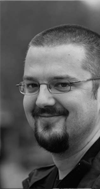 The social web and us
Domen Savič
Domen Savič, a journalism graduate, has more than ten years' experience of sociological aspects of web technologies. As a visiting lecturer, he lectures at the Faculty of Social Science of the University of Ljubljana, the Faculty of Humanities at the University of Primorska, multimedia centres all over Slovenia, and for select clients (Government Communications Office, Rokus publishers and others). Since 2005 he has been the joint editor of the independent e-demokracija.si portal, which in 2011 was nominated for a World Summit Award for the best e-inclusion and e-participation in Slovenia.
The social web (Facebook, Twitter ...) is becoming ever more pervasive in our environment. How can we plan participation in web networks, when should we use them and when should we generally avoid them? What is the current situation in this field in Slovenia, and what do global trends tell us?

 Publish and forget, until it's misused
Andrej Tomšič, IP
Andrej Tomšič graduated with a master's in information-management science from the Faculty of Economics in Ljubljana. In 2002 he began working for the Ministry of the Information Society, where, as a member of the eEUROPE+ 2003 Statistical Working Group, he worked primarily in the area of information society metrics. He continued his work at the Ministry of Higher Education, Science and Technology, and was involved in the SAFE.SI project council and the Information Society Statistics advisory committee. He was a member of the following DG INFSO bodies at the European Commission: eEUROPE +2003 Statistical Working Group, eAccessibility Expert Group, ENISA National Liaison Officer, eEUROPE 2005/ i2010 and Safer Internet plus Management Committee. He has been employed by the Information Commissioner since May 2006.
Web social networks are increasingly part of our daily lives, and, like many other things, they require personal data. Users often post a great deal of their data without concern for their privacy, while social network providers also have much to do to allow guardians of privacy to sleep more easily. The presentation will discuss web social networks through the prism of protection of personal data and privacy.

 ARNES video portal
Matjaž Batič Finžgar, ARNES
Matjaž Batič Finžgar has been employed at ARNES since 2007, and works in the multimedia department. He specialises in VOX web conferencing, and is also the project leader for the ARNES video portal, streaming video and live Flash video.
At the end of 2011, ARNES created a new video portal for streaming video in Flash. It is intended for publishing videos recorded by users on their own cameras or telephones. The portal will soon also enable live video broadcasting.

Moderated by: Maja Vreča, ARNES
Plenary talks (Hall A, Hotel Kompas), 14.30–16.00 |
 Using e-identities to access services
Tomi Dolenc, ARNES
Tomi Dolenc has worked for ARNES since 1994. Despite his computing background, he prefers to talk to people, and spends most of his time communicating with users about the introduction of new technologies and services. In recent years he has been the head of the communications department at ARNES. He is convinced that every technology solution can be explained simply.
More and more services are available, and in the last year ARNES too has had much new to offer. People often don't even realise that they already have a password to access these new services. The “point” is that institutions in Slovenia (all universities, quite a number of schools) increasingly allocate e-identities to their members and users that are “recognised” by various services on the basis of a shared model (i.e. AAI). If you still don't have such an e-identity, you'll probably get one tomorrow. Today you can simply use your ARNES user name in a new way to access these services.

 We've got ArnesAAI, what next?
Blaž Divjak, ARNES
Blaž Divjak is a student at the Faculty of Computer and Information Science. He's been a member of ARNES since 2010, and is actively involved in support for the ArnesAAI infrastructure.
ArnesAAI makes it easier for affiliated organisations to manage user names and passwords, and allows their users to use applications included in ArnesAAI (e.g. Vox web conferences) and their own applications that support this type of login. Logging in to all applications uses a standard username, while authentication is carried out only once a day on the login server of the host organisation. Applications can only access the user data they need in order to provide services, which increases anonymity. The talk will convince us that ArnesAAI is all good, and nothing to be afraid of.

 Identity management
Milan Podbršček, TŠCNG
Milan Podbršček is employed at the Technical School Centre in Nova Gorica. He works as a teacher and lecturer at a further education professional college. He is in charge of technical support for the e-education / west project.
In recent times, it has become increasingly common to link services using directories (LDAP and AD, within organisations) and AAI (outside organisations). Identity management within directories is not a trivial task, so we decided to develop a web application to make it easier. As added value, the application can provide a source of data on learners, parents and employees for other applications that we use in our work.
Video recording 
 Protecting networks
Matej Breznik, SI-CERT
Matej Breznik is an electrical engineering graduate. His previous work mostly involved planning, implementation and management of telecommunications systems, finding solutions and setting up information infrastructure for hotels, maintaining computer networks and developing software solutions. Today he is employed by SI-CERT, where he works on solving security problems in computer networks.
Network security problems have been around for some time. The mass adoption of the internet has increased their importance. The internet is becoming present everywhere, and information that is important to us is increasingly online. Even the ways we socialise are changing, so that today individuals communicate en masse over the internet. All of this makes web identities and network security even more important. If an individual is poorly protected, misuse could lead to the theft of identities, data, money or even something worse. The aim of the talk is to provide delegates with an insight into the threats facing network users in recent years. We will examine changes in recent years in the access points used by attackers, and will review the mechanisms that protect us. We will also study the methods used by modern attackers to gain access to our organisations’ systems, and using case studies set out the key points where protection and attention are particularly important. The session will also cover modern methods of targeted attacks and refute certain myths about protection from them.

Moderated by: Tomi Dolenc, ARNES
"Services" Section (Hall A, Hotel Kompas), 16.30–18.20 |
 ARNES' education and research internet: from 14 kb/s to tens of Gb/s
Ksenija Furman Jug, ARNES
Ksenija Furman Jug has been part of the ARNES team since 1994. Back in the days of 14 kbps connections, she was involved in the construction of the ARNES backbone network. She managed modem access for 60,000 dial-up users, while since 2007 she has been head of the network advisory and monitoring group. Together with her group colleagues, she ensures that institutional connections to the ARNES network meet users’ requirements.
In 20 years, the capacity of the ARNES network's international connections has increased more than 650,000 fold. Multimedia content requires ever increasing transmission capacities. If we want to develop cloud computing, we must first build reliable underground optical infrastructure. Demand is growing, and today optical connections are the appropriate long-term solution. What options do institutions have for using optical connections? What can those that do not (yet) have access to optical connections do?

 New personal package – click for your mail
Maja Vreča, ARNES
Maja Vreča has worked for ARNES since 1995 and is the head of the basic user support department.
Service users always want to use individual services without filling in various forms. We want everything we need just a few clicks away. If you too are tired of application forms and requests for extensions, you'll certainly be interested in how you can switch to a new, faster, paperless method of creating and extending ARNES electronic addresses and usernames.
Video recording 
 Arnes Planner – always coordinated – and Blog.arnes – website in ten minutes
Mitja Mihelič, ARNES
Mitja Mihelič is a computing and informatics graduate. Since 2008, he has worked in the ARNES systems and applications support department. Among his duties, he is responsible for the Arnes Planner and Blog.arnes services.
Coordinating group schedules and various content usually required many exchanges of electronic messages among participants. The ARNES Planner greatly simplifies the coordination process. Participants enter their name and choose a schedule or other option that suits them. The Planner compiles the votes and shows the results for individual schedules and other options. The web journal or blog makes it simple for users to publish web content. You can customise your blog easily, and use it for a personal, organisation or project website. Users can choose the format and prepare content, while ARNES will ensure that the server operates uninterrupted. Several active websites and new service functions will be presented.

 Webmin – web interface for managing ARNES VPS servers (PHP/MySQL)
Jure Kranjc, ARNES
Jure Kranjc has worked in the ARNES department for systems and applications support since 2009. He graduated in computing and informatics and deals with systems administration for Linux servers and is involved in the Slovenian initiative for a national grid project.
Webmin is a web interface for managing servers based on the Linux operating system. ARNES users of VPS services mostly use the Asistenca package, which provides many options for software to process web pages, and also includes technical support from ARNES, which also undertakes important server configuration. Webmin is a solution that – without reducing security – increases user freedom in managing servers, helps in troubleshooting and increases control of servers.

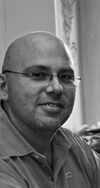 New ARNES MCU videoconferencing portal
David Vrtin, ARNES
David Vrtin has 22 years' experience of academic and research networks. He has been employed at ARNES since 2001, working on network services, dealing primarily with real-time audio and video communication. In 2003, by setting up H.323 multipoint videoconferencing services, he introduced ARNES multimedia services, adding streaming video on demand (VoD) and live recording and transmission of video.
Since 2003, ARNES has offered all organisations with H.323 videoconferencing room systems a comprehensive service covering multipoint videoconferencing, videoconference recording and web streaming of videoconferences, as well as connecting organisations' videoconferencing systems to the international videoconferencing network. The upgrade of the main videoconferencing server in 2011 means that videoconferences now support high-definition pictures up to FullHD 1080p resolution, 60 frames/s refresh rates and CD-quality sound. At the end of 2011, we launched a new MCU videoconferencing portal allowing users to manage their videoconferencing rooms themselves and record and broadcast videoconference events live on the web. All of this takes place on ARNES servers. The new web interface makes it easier and simpler to use videoconferences, as they no longer need to be organised by email and telephone calls to ARNES.

 Safe on the Internet project – one year on
Jasmina Mešić, ARNES
Jasmina Mešić works at ARNES as the coordinator of the national information security public awareness programme, operating under the name Safe on the Internet. She graduated in media communication from Maribor's Faculty of Electrical Engineering and Computer Science.
It's almost a year since the Safe on the Internet project was introduced to the Slovenian public. On 7 February 2012, World Internet Safety Day, we will be able to claim that we've already tried for a year through various activities to raise awareness of internet safety. A brief review of 2011 will show how the web public has accepted our portal, www.varninainternetu.si, and reveal which web frauds were the most prevalent, which communications tools we used to reach our target audience, and why the enemy Facebook has proven to be an excellent ally of our project.

Moderated by: Damjan Harisch, ARNES
Section "From optical fibre to quality communication" (Hall B, Hotel Kompas), 16.30–18.20 |
Miha Dimec, Aleš Zavodnik, Matjaž Straus Istenič, Miha Jemec, Matej Vadnjal, all ARNES
All five speakers are members of ARNES' backbone networks development team. Put very simply, it could be said that Miha Dimec builds an optical infrastucture, Aleš lights them up and prepares them for data transmission, Matjaž is responsible for internet protocols and IP-traffic routing, Miha Jemec ensures quality communication, and Matej makes sure we have good monitoring and a wide range of management options.
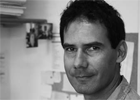 Miha Dimec has been in the ARNES backbone team since ARNES' international connections were 64 kbps, and users had 2400 bps modem connections. Miha is one of the main technicians of the backbone network team, and is mainly active in optical infrastructure and building ARNES nodes. Miha is an enthusiastic air rifle sport shooter, a table-tennis player and keen cyclist. He likes to hang out with people with a good sense of humour.
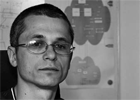 Aleš Zavodnik helps with the operation of equipment that allows a single optical fibre to carry multiple gigabit or multi-gigabit connections. He keeps up with technical innovations and upgrades the ARNES backbone network to secure faster data transmission rates and improved reliability. In his spare time he is building a family house and cultivating miniature trees in pots.
 Matjaž Straus Istenič is the lead engineer for the backbone network, particularly for IP technology, routing protocols and monitoring systems. Matjaž, known as ARNES' IPv6 evangelist, is a member of the expert council of the Go6 institute, the Slovenian working group for IPv6 and one of the initiators of Slovenian IPv6 meetings. He successfully combines enthusiasm for network technology and cultivating a small vineyard in Bela Krajina.
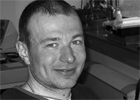 Miha Jemec, ARNES' quality-of-service (QoS) expert, describes himself as a “networked” engineer. Recently, he's mostly been involved with DSCP in the IP header and individual bits within it, and with persuading the equipment of various manufacturers to correctly understand this. Miha is also the author of the world-famous packETH application, which he himself is proud to use in quality-of-service testing for communications. He likes to spend his spare time climbing mountains.
 Development of advanced tools for managing the ARNES network depends to a large extent on Matej Vadnjal. Matej is a decidedly practical and multi-faceted professional, a master of both coding and modern hardware. His work extends to all the tasks of the ARNES backbone team, from network monitoring, troubleshooting and fault removal to complex services, such as setting up route servers with user portals for Slovenian internet exchange (SIX).
Systems engineers and computer network administrators recognise that quality assurance for network services is not straightforward. This group of talks will set out the daily challenges. Quality communication is enabled by a complex mesh of different technologies. Network services are linked in layers and consist of various elements – suitable premises, electricity supply, copper cables or optical fibres, connection technologies for complex network protocols, and software. This structure is hidden from users, although all of its elements directly affect the user experience of network services. Members of the ARNES backbone team will describe this combination through practical examples. We will show the mechanisms we use to ensure quality communication and network services. We will describe the technology for dedicated point-to-point connections and present its application to services that require high quality, secure and private communications. We will emphasise the importance of the modern IPv6 protocol and demonstrate is practical usefulness in local networks. The talks will include clear presentations of the tools used to monitor key connection parameters. In a straightforward way, we will untangle the interwoven technologies and set out the key points in the individual layers on which modern network services are built.

Moderated by: Matjaž Straus Istenič, ARNES
|
*The programme of the ARNES 2012 Conference is preliminary and may still change before the event.