ARNES 2013 conference (15. 5. 2013)
USER MOBILITY

Today, ensuring access to wireless networks is no longer an advantage, but rather a necessity. Users expect to be able to access services anywhere at any time, regardless of the device they’re using - desktop computer, laptop, tablet or telephone. Our web services must work on laptops as well as tablets.
This year’s conference will examine mobile trends in the European education and research sector, and will review the current situation in Slovenia. We will look at how network administrators can use mobile applications in our work, and discover the implications of mobile application development for financial and human resources. We will also learn that the new options for accessing and using services bring new risks, which we must recognise and protect against. We will link the event to a presentation of current ARNES services, in terms of both end users and network and service custodians.
The ARNES conference brings together users from the education, research and culture sectors, and is aimed at a broad spectrum of delegates, covering both user and systems aspects of the use of new technologies.
Date and location
15 May 2013, from 9:30. The conference will be held in Hotel Kompas, Kranjska Gora.
Conference registration
Conference registration will be open from 4 April 2013 until fully booked.
Conference programme*
Delegate registration (8:00-9:30)
Plenary talks (Hall A, Hotel Kompas), 9:30-11:05 |
ARNES 2013 Conference Opening
Moderated by: Tomi Dolenc, ARNES
User Mobility - Now and in the Coming Years
Stefan Winter, RESTENA
 Stefan Winter graduated in Computer Science at the University of Karlsruhe, Germany, in September 2004 with a specialisation in telematics and the foundations of Computer Science. Since then he has been working as R&D Engineer for the Luxembourg Research and Education Network RESTENA, where network roaming and identity federations are the focus of his activities. He led the R&D work for EDUROAM during the second half of the GN2 project, and is now continuing these efforts as Roaming task leader in GN3. He is also a member of the Global EDUROAM Governance Committee.
Usage patterns of IP networks are changing - the user base is moving: from the "Geeks" to the "John Doe's", from expectations like "Happy if it works" to an annoyed "If it doesn't work, I'll go elsewhere!"; services are expected to be accessible ubiquitously (and annoyed users don't want to know and do not care why they wouldn't be). NRENs and their customers need to operate while keeping these user expectations in mind, and need to thrive in an environment in which commercial equivalents of their services are a direct competitor. This is quite a challenge - one with no clear solution. In terms of mobility, now is the time for NREN networks to re-invent themselves.
Evolution or revolution of the wireless Internet?
Rok Papež, ARNES

Rok Papež works for ARNES in the authentication infrastructure and backbone network groups. He develops solutions for authentication systems, wireless networks, LDAP directories and unified web login. He is particularly interested in security in fixed and wireless networks, and promoting IPv6.
Wireless networks have become commonplace. We use them at home and at work, with the main development driver being mobile devices that are entirely dependent on wireless access. As the availability of devices and educational content continues to improve, network use is growing and too many users encounter capacity restrictions. We will describe in simple terms innovations in the field of wireless networks, faster speeds in future standards, and the transition to the additional 5 GHz frequency band. Questions are also arising about the architecture of wireless networks, the selection of autonomous or easy-to-access nodes, the timing of transitions from one technology to another, and legal-financial complications.
Moderated by: Avgust Jauk, ARNES
Plenary talks (Hall A, Hotel Kompas), 11:35-13:15 |
Network Monitoring on Mobile Devices: Global Access, Local Benefits
Domenico Vicinanza, DANTE

Domenico Vicinanza works at DANTE, Cambridge, UK, as a product manager. He received his MSc and PhD degrees in Physics and is a professional composer of music. He worked for seven years as a Research Associate and as a Scientific Associate at CERN, Geneva. His activities during this time included LHC Computing Grid sites administration, system administration, IT resources management, network troubleshooting, grid computing, services support and teaching. He is also involved in the application of distributed computing and advanced networking technologies to music and visual arts as the technical coordinator of the ASTRA (Ancient instrument Sound/Timbre Reconstruction Application) and Lost Sounds Orchestra projects for the reconstruction of musical instruments on GÉANT and EUMEDCONNECT.
The presentation will focus on how mobile devices are changing the ways network monitoring and network troubleshooting can be carried out today. Tablet PCs, smartphones, and other lightweight devices are becoming increasingly popular. As a consequence their role in enabling ubiquitous, fast, and versatile access to live information about the status of the health of the network is becoming increasingly important. The talk will present some of the most recent developments in the field of network monitoring and network troubleshooting through mobile devices: from improving campus networks to supporting remote users, from enabling global troubleshooting to helping local research communities.
Lectures are boring, let’s switch on the mobile device
Janko Harej, E-šolstvo

Janko Harej is senior lecturer at Nova Gorica Education Centre. He is interested in all aspects of the introduction of ICT in schools. He was involved in curriculum renewal, the development of e-materials and e-textbooks, establishing various web services, and training education professionals.
There is a great deal of computer equipment in schools. Most is brought in by pupils and students themselves - in their pockets. It’s time to start using mobile devices regularly in lessons. How? There are many options...
Videoconferences on mobile devices and unified communications
David Vrtin, ARNES

David Vrtin graduated in electrical engineering from the Faculty of Electrical Engineering and Computer Science of the University of Maribor. He first encountered academic and research networks in the autumn of 1990, with his interest immediately piqued by how to use computer networks to communicate live with others over the greatest distances possible. He has worked for ARNES since 2001 in the field of network services, where he is primarily involved in real-time audio and video communication. In 2003, by establishing multipoint H.323 videoconferencing services, he introduced ARNES’ multimedia services, adding video on demand (VoD) streaming as well as recording and transmission of live video. Lately he has been concentrating on the introduction of high-definition videoconferencing for general use, exploiting all the possibilities of technology.
ARNES has offered multipoint videoconferencing since 2003, and since 2011 has supported video resolutions up to FullHD. H.323/SIP videoconferencing software for personal computers, tablets and smartphones, has been substantially updated and simplified over the last year. Some no longer require users to enter special settings and others install automatically without any registration; they are free and can be downloaded, installed and joining a videoconference in less than a minute. Does this mean that we will finally be able to use videoconferencing whenever and wherever we need it, without having to think about technical details while being able to switch between different device and networks easily?
The mobile ecosystem from a market perspective
Andraž Logar, 3fs

CEO of 3fs d.o.o., consultant to Toshl and POViO, graduate of the Media Design School Auckland, over a decade’s professional experience in mobile and telco technologies, user interfaces, design and digital marketing. Through 3fs d.o.o. he regularly works with companies like Ericsson, Nokia, Mindshapes and Telcel.
The smartphone world represents an enormous opportunity, but is not without its pitfalls. Success requires minimising the luck factor through detailed knowledge of the field, suitable technology and design solutions, marketing planning, and exceptional cost control. And that’s why we talk about an ecosystem.
Moderated by: Damjan Harisch, ARNES
Plenary talks (Hall A, Hotel Kompas), 14:30-16:00 |
Secure wireless networks are the basis for the internet of things
Luka Mali, FE, UNI-LJ

Luka Mali, holds the position of a senior researcher and research assistant at the University of Ljubljana, Faculty of Electrical Engineering, Laboratory for Telecommunications. His current work focuses on Machine-to-Machine communications, 4th generation mobile networks, wireless networks, low power wireless communications, sensor networks and Internet of Things applications. He is actively involved in several projects as a proof-of-concept engineer, project manager and project advisor.
Connecting as many different devices as possible together wirelessly will enable a new internet era, the internet of things. Do existing wireless technologies provide sufficient security for communications with road signage, medical sensors or ATMs? What about the public hotspots and business and residential wireless networks to which we connect personal mobile terminals and over which we synchronise confidential data to the cloud? Are Slovenian wireless networks secure enough? What are the main risks that we don’t recognise as users of wireless networks, and what are the main challenges for secure networking of tens of billions of devices in the coming years?
Mobile devices attack!
Tadej Hren, SI-CERT

Since 2004, Tadej Hren has worked at SI-CERT, the national computer emergency response team, which operates within ARNES. He coordinates the resolution of network security problems.
Our networks are frequently targeted by attackers. With the widespread use of wireless networks, attackers no longer need physical access, but can carry out an attack from a remote location, which may be some distance from your premises. On the other hand, smart mobile devices have become so powerful that an attack can be carried out by a device hidden in a pocket. The talk will consider how an attacker can attack a network using a smart mobile device, and what protection options are available.
Are we smart enough for smart devices?
Andrej Tomšič, IP-RS

In 2002, Andrej Tomšič began working at the Ministry of Information Society, where as a member of the eEUROPE+ 2003 Statistical Working Group he worked primarily in the area of information society metrics. He has also been a member of the following bodies of the DG INFSO of the European Commission: eEUROPE +2003 Statistical Working Group, eAccessibility Expert Group, ENISA National Liaison Officer, eEUROPE 2005/i2010 and Safer Internet plus Management Committee. He graduated with a master’s degree in information management studies at the Faculty of Economics in Ljubljana in 2006. He has worked for the Information Commissioner since May 2006, dealing mainly with legal, technological and socio-economic challenges to privacy in the information society. He represents the Information Commissioner in the IWGDPT international working group, the Article 29 Working Party Technology Subgroup and the Future of Privacy. He has completed ISO/IEC 27001:2005 information security standard lead auditor course.
Smartphones and tablets are part of everyday life, and are soon to be joined by smart glasses, augmented reality, drones. Anybody can walk into a shop and buy devices that enable wholesale surveillance – we are moving towards a world in which everyone can monitor everyone else, and we are losing the power to set limits on our privacy, since we have less and less say on when, where, with what, how, to what extent and by whom we are monitored. Are we as a society and as individuals smart enough to use such smart devices?
Moderated by: Tomi Dolenc, ARNES
Section A (Hall A, Hotel Kompas), 16:30-18:00 |
The (everyday) adventures of an ARNES user
Andreja Nagode, Ivan Cankar PS

Andreja Nagode, a Slovene language teacher and a graduate in library studies, was employed as school librarian in the Ivan Cankar Primary School in Vrhnika immediately after completing both of her diplomas (in one she analysed websites of foreign and Slovene higher-education libraries). Throughout her work with users she has monitored how internet media influence them. In the last two years she has also been involved in editorial work and organisation of the school library’s website. She continually tests various ICT services to bring the library closer to users. She has been involved in the organisation of three meetings of the Association of School Librarians on the use of ICT in school libraries.
Like most librarians, the author of the talk enjoys telling and reading stories. The talk will describe her day from the viewpoint of an ARNES user. The central theme of the story is the various ARNES services that she needs and uses in her work as a lay user. She presents her use of webmail and the associated ARNES FileSender service, which allows users to send large files, and ARNES Blog, which she uses to independently edit the school library website. Suitable solutions to daily problems presented include ARNES Planner, Vox Web Conference, live streaming and use of the ARNES videoportal.
ARNES and cloud services
Andrej Bagon, ARNES
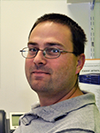
Andrej Bagon has been employed in the department of applied systems support since 2007. His primary responsibilities are monitoring systems, virtualization and cloud services, and data storage.
It is important for existing and potential future users to be aware of what cloud services are available and what options they offer. ARNES cloud services offer solutions such as sharing files as large as 100 GB, access to high-speed, reliable and secure virtual servers, storage of backup files on our servers etc. In response we will present ARNES services and ways to use them, which you may not yet know, such as mail account as data storage, hosting virtual servers, ARNES FileSender, cloud server and cloud storage.
Mobile ARNES multimedia
Matjaž Batič Finžgar, ARNES

Matjaž, a physics graduate, is employed by ARNES in the multimedia department. He’s an Adobe Connect and VOX web conferencing expert. In recent years he’s been directing his work towards streaming video and live transmission. He’s the project leader for VOX Web Conferences and the ARNES video portal.
Are you looking for a multimedia portal that has more to offer? The ARNES video portal combines ARNES multimedia services, allowing users to publish video recordings, transmit video live and publish VOX and MCU conference recordings. The portal allows all teachers to present their video content to a very wide range of users or only to a particular class of students. You can actively use all ARNES multimedia services on PCs and mobile devices. The talk will focus on mobile aspects of ARNES’ multimedia services and practical advice for users.
ARNES personal package - click, click ... ARNES webmail without the paperwork
Iris Govedič, ARNES

Iris Govedič has worked at ARNES since 2008. She works in the network management and consulting department, and is involved in supporting the ArnesAAI federation.
A year ago, we presented the interface for creating a personal package - the ARNES drawer. We envisaged it as a tool to allow you to independently manage your personal space on the ARNES server, which hosts your email, static website and file storage space, among other things. The service was in pilot phase for almost a year. During this period, we fixed bugs and it is now ready for production. We will present the service’s functions, the experience of using a form- and signup-free system, and clicking to a better user experience.
Moderated by: Domen Božeglav, ARNES
Section B (Hall B, Hotel Kompas), 16:30-18:00 |
Building urban academic optical networks
Jože Hanc, ARNES
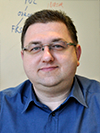
While still a student, Jože Hanc was involved in the work of the Soros Foundation to establish and maintain network infrastructure and on specifications and procurement of equipment for donations. After graduating from the Faculty of Computing and Information Science, he began working at ARNES, where he explains the benefits of high-speed connections for schools to headmasters, mayors and municipalities, and runs projects to establish local and urban academic optical networks.
The road to building an urban optical network starts with funding and ends with schools having high-speed connections to the ARNES network and the internet. Such projects involve school IT staff, principals, professionals in municipal administrations and even mayors. Together we look for options to use existing mains or build new ones, and to install optical cables. How do such agreements happen? Where can we find data? Who drives projects? What are the procedures for jointly funded projects? We will examine the cases of Kočevje and Slovenj Gradec, and quickly review active projects in other parts of Slovenia.
Email Spam
Nejc Porenta, ARNES
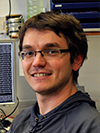
Jernej Porenta graduated from the Faculty of Computing and Information Science of the University of Ljubljana. At ARNES, he is responsible for the servers that prevent spam reaching user mailboxes.
We all know the hassle caused by spam. The talk will present some interesting aspects of the background to spam, offer some advice on how to protect yourself against it, and describe how we handle this at ARNES (and how bigger organisations do it).
Sort out your DNS records
Klemen Andreuzzi, ARNES

Klemen Andreuzzi graduated from the Faculty of Computing and Information Science. He has been employed at ARNES for 5 years, and works on systems administration. He uses his broad knowledge to develop and implement advanced services (DNS, email, firewalls, load balancing, high-availability systems, optimization etc.). In his spare time he works on computer graphics and computer vision.
This year we will undertake a major upgrade to the domain name management system (DNS), which will allow users to manage their own domains. System users will be able to add domains and manage their DNS records. The system will give users even more control of DNS records and reduce the time needed to manage them. The system is expected to enter the beta stage in the second half of 2013, and will be made available to users following successful testing.
New scientific discoveries using the grid
Jure Kranjc, ARNES

Jure Kranjc has worked in ARNES’ department of applied systems support since 2009. He works on server virtualization, cloud services and high performance computing centres. He is also involved in the Slovenian Initiative for a National Grid.
For the Slovenian research space, the need for accessible high performance computing centres has become a daily occurrence. Researchers and scientists need a great deal of computing and data resources for their projects, which their organisations often cannot afford. Organisations have therefore begun to share their capacities, connecting them so that for users they act as a distributed supercomputer. This is grid technology. Today the grid is used for various purposes, including new medicines research, studying climate change and earthquake simulation. The talk will introduce grid technology and examples of projects that could not have been carried out without it.
ARNES labs
Peter Kacin, ARNES

Peter Kacin is a student at the Faculty of Computing and Information Science of the University of Ljubljana. He has worked with ARNES since 2010, and is actively involved in the department of applied systems support in preparing new and maintaining existing services.
ARNES labs is an environment for showcasing and testing promising new services. We set-up ARNES labs so users could test pilot services and obtain feedback on potential interesting features and benefits. If user response is good, the service will join other production services.
Moderated by: Maja Vreča, ARNES
Welcome reception with cheese tasting and socialising (Hall C, Hotel Kompas), from 18:30 |
*The programme of the ARNES 2013 Conference is tentative and minor additional changes are possible.